
The Biggest Mistake Most Homeowners Make Before Designing a Home
Estimated Reading Time: 8 Minutes
Category: Dream Home Planning
Published: June 2026
Quick Summary
Most homeowners begin planning a new home by focusing on square footage, room counts, or exterior appearance. While these elements are important, they are not where the process should begin.Over the years, I've found that the most successful projects start with a clear understanding of how the family actually lives. Start planning your dream home the right way, homeowners should first evaluate their lifestyle, priorities, and long-term goals.Doing so often leads to a better home, fewer regrets, and a more efficient use of the construction budget."The best home designs begin with understanding people, not floor plans."— Jim Patrick
Why This Matters
Building a home is one of the largest financial commitments most families will ever make. Yet many people begin the process by browsing floor plans online, not realizing that stock house plans can cost more than expected. Scrolling social media or comparing square footage with friends and neighbors.Unfortunately, none of those activities help determine whether a home will truly fit the people who live in it.A home that looks impressive on paper can become frustrating to live in if it doesn't support your daily routines, family structure, hobbies, future plans, or budget. I have seenfamilies spend hundreds of thousands of dollars creating spaces they rarely use while overlooking features that would have improved their lives every day. It begs to ask the question, how much house you really need?The earlier these decisions are made, the less expensive they are to correct. Once construction begins, every change becomes more costly and more complicated.The Problem Most Homeowners Face
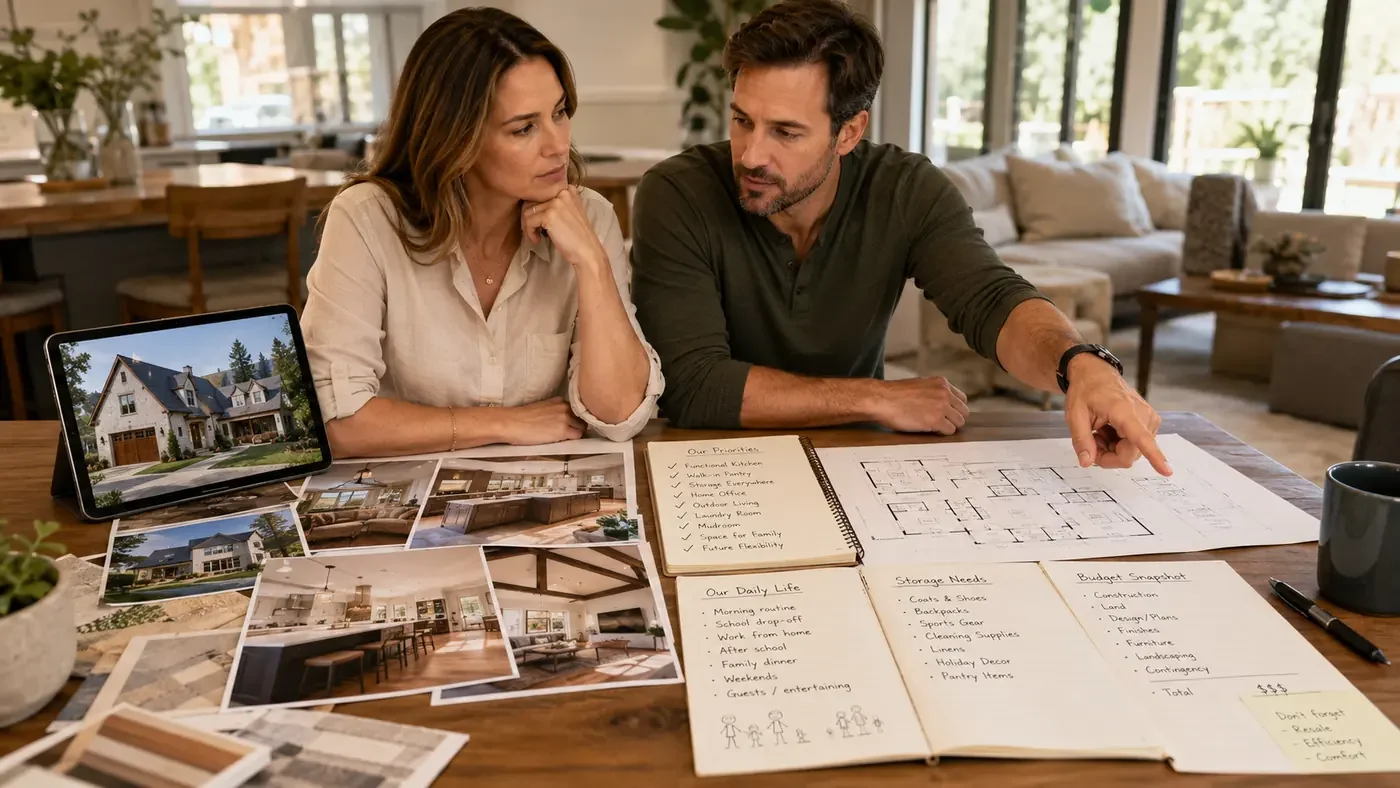
Most homeowners believe the design process starts with finding the right floor plan.In reality, that approach often creates problems before the design process even begins.A family may fall in love with a beautiful home online only to discover later that the garage is too small, the kitchen lacks storage, the bedrooms are oversized while the living spaces are undersized, or the plan doesn't fit their building site. Many don't realize that there are also hidden costs of building a larger home.Others become focused on a specific architectural style without considering whether the layout supports their lifestyle.I frequently meet homeowners who arrive with dozens of photos saved from the internet. While these images help identify design preferences, they rarely answer the most important questions.How do you live?How do you entertain?How long do you expect to stay in the home?What frustrations do you have with your current home?
The answers to these questions should drive the design process.Not the photos.Not the square footage.Not the trends.The most successful homes are designed around people first.What I've Learned Over Nearly Five Decades
Since 1977, I've had the opportunity to help homeowners through nearly every stage of the home-building process.One pattern has remained remarkably consistent.The clients who spend the most time understanding their needs before designing their home are usually the happiest with the final result.Years ago, I learned that my job wasn't simply drawing rooms and arranging walls. My job was helping families understand what they truly needed before construction ever began.Sometimes that means making a home smaller.Sometimes it means adding flexible space.Sometimes it means moving a bedroom, enlarging a garage, or planning for future accessibility.The best designs often come from conversations that have very little to do with architecture and everything to do with lifestyle.A well-designed home should support the way your family lives today while remaining adaptable for tomorrow.Key Factors To Consider1. Lifestyle
Think about how you spend a typical day.Do you work from home?Do you entertain frequently?Do you have hobbies requiring dedicated space?
Your home should support your daily routines.2. Family Structure
Who lives in the home today?Who might live there in the future?Children, aging parents, grandchildren, and guests can all influence the design.3. Long-Term Plans
Many homeowners design only for today's needs.Consider where you expect to be five, ten, or twenty years from now.Future planning often prevents costly remodeling later.4. Budget Priorities
Every project has budget limitations.Understanding which features matter most allows you to invest where you'll receive the greatest long-term value.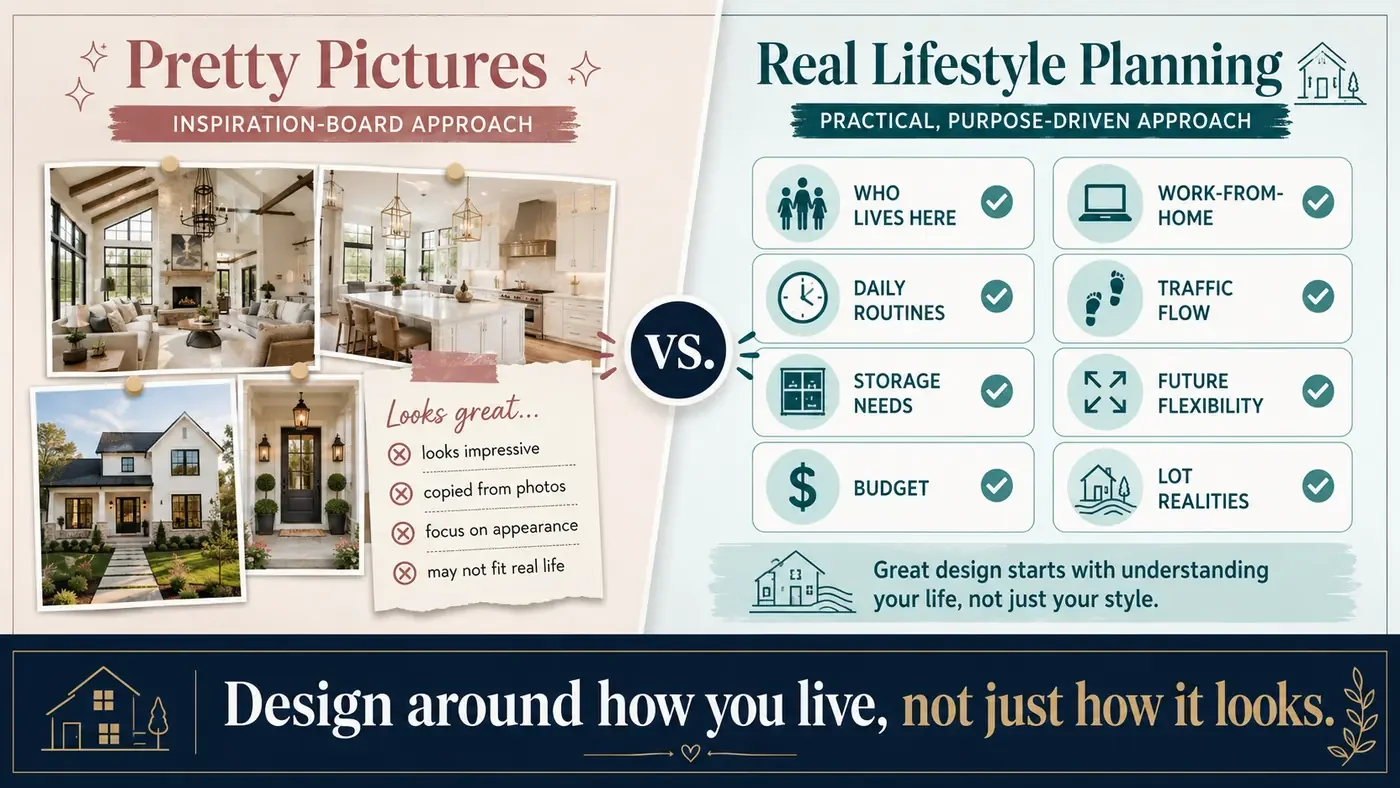
Questions I Would Ask My Clients
Before we ever discuss floor plans, I would ask:What do you love about your current home?What frustrates you most about your current home?How long do you expect to live in the new house?Do you expect your family size to change?How important is resale value?Do you entertain frequently?What hobbies require dedicated space?Are accessibility concerns likely in the future?What rooms do you use every day?What rooms do you rarely use?
The answers to these questions often shape the entire project.Common Mistakes To Avoid
Mistake #1: Starting With Exterior Photos
A beautiful exterior does not guarantee a functional floor plan.Design from the inside out.Curb appeal should start before you choose a style.
Mistake #2: Building More House Than You Need
Extra square footage increases construction costs, maintenance costs, heating costs, and future remodeling expenses.Mistake #3: Following Trends
Trends change.Your lifestyle matters more than current design fashion.Mistake #4: Designing Only For Today
Families evolve.The best homes remain functional through multiple stages of life.Designer's Advice
If I were helping a client make this decision tomorrow, I would tell them to stop looking at floor plans for a few days.Instead, spend time evaluating how your family actually lives.Make a list of everything you love about your current home. Then make a list of everything you would change.Think about your daily routines, your future plans, your hobbies, and the spaces you use most.Only after those conversations should you begin designing the home itself.The floor plan should be the result of those decisions—not the starting point.Key Takeaways
✓ Design around people, not floor plans.✓ Lifestyle should drive every major design decision.✓ Avoid building unnecessary square footage.✓ Plan for future life changes.✓ Understand your priorities before construction begins.Ready To Start Planning?
Most expensive mistakes happen before construction starts.Before you spend money on plans, permits, or materials, make sure you have a clear roadmap.Download the Free Dream Home Planning ChecklistDOWNLOAD MY FREE CHECKLIST