Estimated Reading Time: 9 Minutes
Category: Lifestyle Space Planning
Published: July 2026
Quick Summary
Most homeowners start planning their dream home by looking at house plans, exterior photos, square footage, room counts, and style ideas. Those things matter, but they are not the best place to start.
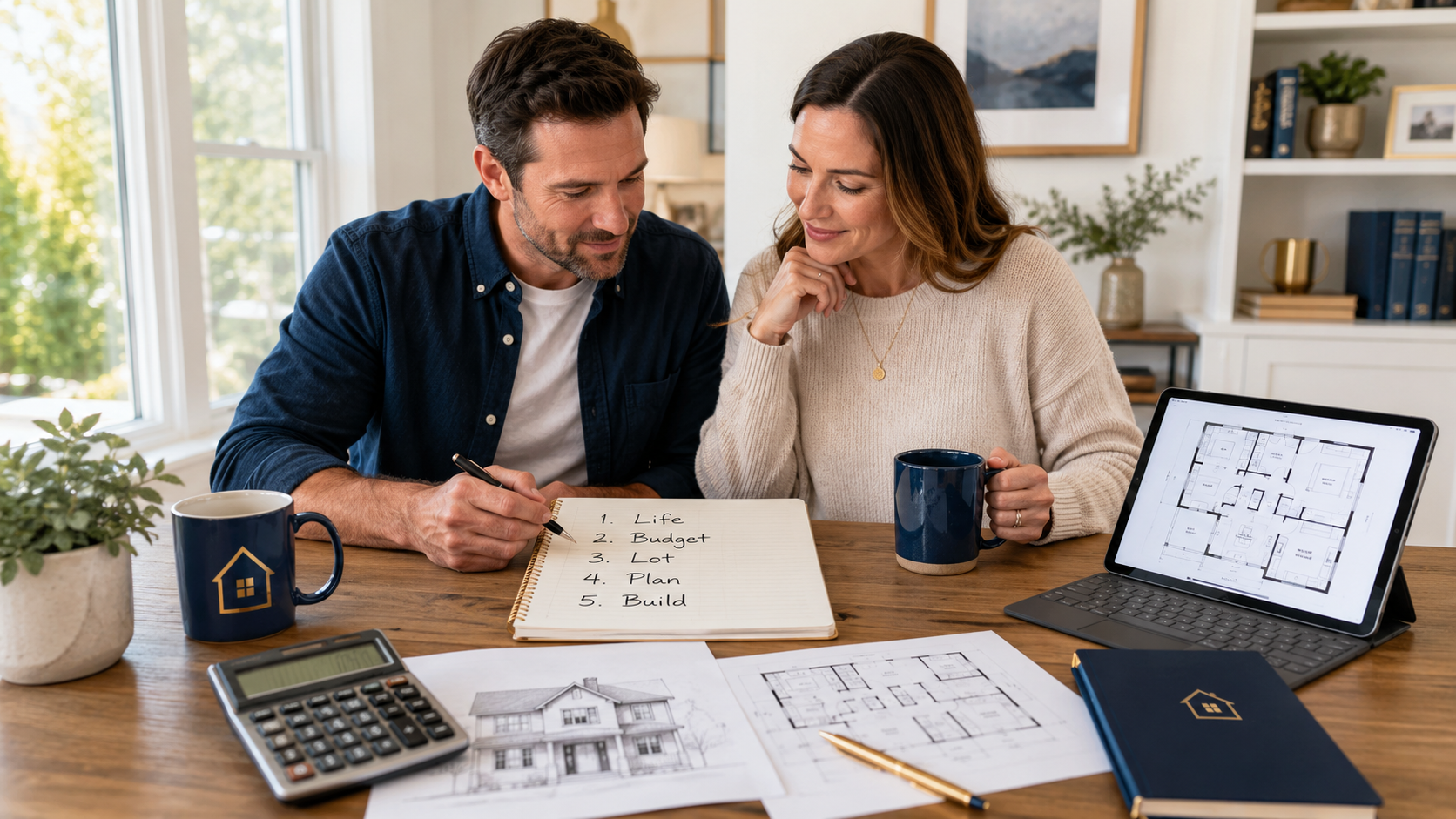
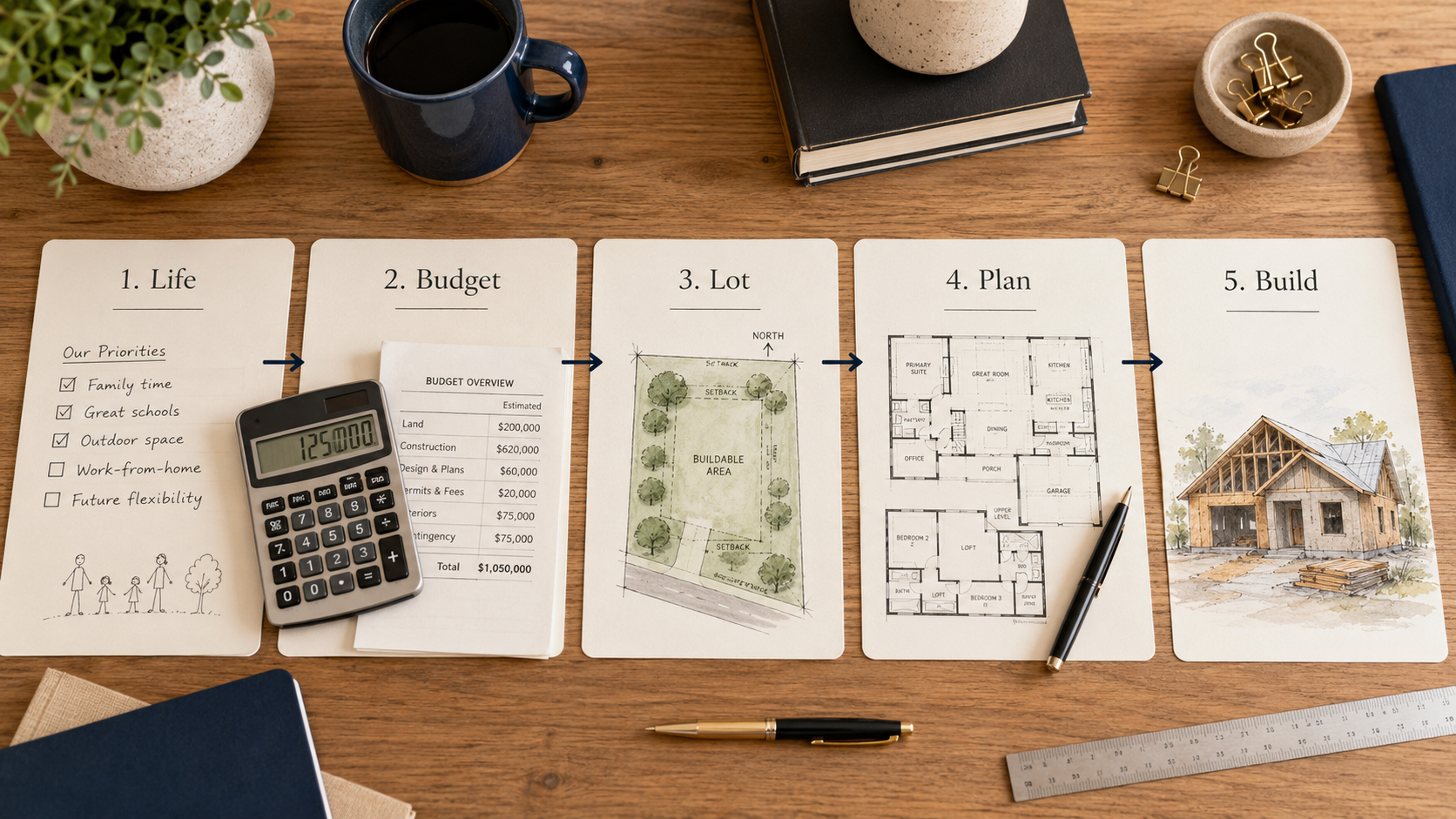
The right way to start planning your dream home is to begin with your life.
Before you choose a plan, pick a style, or decide how large the house should be, you need to understand how your family actually lives every day. Your routines, storage needs, future plans, budget, property, vehicles, hobbies, work habits, and long-term goals should shape the home before the floor plan does.
A dream home is not just a house that looks good. It is a home that fits your family, your budget, your lifestyle, and your future.
Why This Matters
Building a home is one of the largest financial decisions most families will ever make. It is also one of the most emotional.
That combination can lead people to move too quickly.
They see a beautiful home online.
They fall in love with a kitchen.
They save a floor plan.
They imagine a front porch, a great room, or a large primary suite.
They start talking about square footage before they have talked about how they live.
That is where problems begin.
A home can look perfect in a photo and still be wrong for the family who builds it. A floor plan can have the right number of bedrooms and still function poorly. A house can include every feature on a wish list and still feel uncomfortable, expensive, or inconvenient after move-in.
The early planning stage is where the most important decisions are made. It is also where many expensive mistakes can be avoided.
The Problem Most Homeowners Face
Most homeowners do not have a clear process for starting.
They usually begin with one of these questions:
“How many square feet do we need?”
“How many bedrooms should we have?”
“What style of house do we like?”
“Can we find a plan online?”
“What can we build for our budget?”
Those are reasonable questions, but they are not the first questions I would ask.
The better first question is:
How do we actually live?
That question changes everything.
It moves the conversation away from guessing and toward planning. It helps separate what looks good from what will work. It helps you avoid building space you do not need while missing the spaces you will use every day.
Many homeowners think planning begins with the house.
In my experience, planning should begin with the family.
What I Have Learned From Years of Designing Homes
When I sit down with clients, I do not want to start by simply copying a plan they found online. I want to understand who they are, how they live, what frustrates them about their current home, and what they hope will be different in the next one.
That conversation usually reveals more than a floor plan ever could.
A family may say they want a large open kitchen, but what they really need is better traffic flow, more storage, and a place for everyone to gather without crowding the cook.
A couple may say they need a formal dining room, but after talking through how often they entertain, they may realize a larger casual dining area would serve them better.
A homeowner may say they want four bedrooms, but the real need may be a quiet office, a hobby room, a guest space, or a flexible room that can change over time.
Another family may start with square footage, but after discussing budget, cleaning, maintenance, taxes, heating, cooling, and daily use, they may realize that smarter space matters more than larger space.
Good planning uncovers the real reasons behind the wish list.
That is why the beginning matters so much.
Start With Your Current Home
One of the best ways to plan a new home is to study the home you live in now.
Do not only think about what you like. Think about what does not work.
Where does clutter collect?
Where do people run into each other?
Where do you wish you had more storage?
Which rooms rarely get used?
Which rooms are too small?
Which rooms are too far apart?
Where do groceries come in?
Where do coats, shoes, backpacks, purses, tools, and pet supplies land?
Where do guests gather?
Where do you want more privacy?
Where do you want more connection?
Your current home is giving you information every day.
A good design process pays attention to that information.
Many homeowners focus too much on what they want to add and not enough on what they want to fix. But the frustrations in your current home are often the clues that lead to a better design.
Think Through a Normal Day
A home should support daily life before it supports special occasions.
Walk mentally through a normal weekday.
Where do you wake up?
How does the morning routine work?
Who needs bathroom space at the same time?
Where do clothes, laundry, and towels go?
Where do you make coffee?
Where do kids, pets, or guests move through the home?
Where do you enter from the garage?
Where do groceries land?
Where does mail collect?
Where do you charge phones, tablets, and laptops?
Where do you work, read, relax, or watch television?
Then walk through an evening.
Where does everyone gather?
How does dinner happen?
Where does cleanup happen?
Where do you want quiet?
Where do you want connection?
Where do you want separation?
This exercise is simple, but it is powerful.
It helps you design a home around real life instead of a showroom version of life.
Plan for Your Family, Not Someone Else’s
One of the biggest mistakes homeowners make is designing for people who rarely visit instead of the people who live in the home every day.
They may build a formal dining room for holidays that happen a few times a year.
They may add extra bedrooms for occasional guests.
They may oversize the great room for parties they rarely host.
They may create spaces that sound impressive but do not support daily living.
That does not mean guests are unimportant. It means the everyday family should come first.
Your home should fit the people who live there most of the time.
If you entertain often, plan for it.
If family visits frequently, plan for it.
If adult children or grandchildren stay overnight, plan for it.
If you rarely host overnight guests, do not let guest space control the whole design.
The right home is not based on what every other homeowner wants. It is based on what your family actually needs.
Understand Your Budget Before You Fall in Love With a Plan
Budget should not be an afterthought.
Too many homeowners fall in love with a plan before they understand what it may cost to build. Then they spend the rest of the process trying to force that plan into a budget it was never designed to meet.
That is frustrating for everyone.
It is better to be honest early.
Your budget should influence the size of the home, the complexity of the roof, the foundation type, the garage size, the window package, the exterior materials, the interior finishes, and the number of special features.
That does not mean your home has to be plain. It means the design should be realistic.
A well-planned home can feel better than a larger home that stretches the budget too far.
The goal is not to build the most house possible. The goal is to build the right home without creating financial stress that follows you after move-in.
Let the Lot Help Shape the Home
The land matters.
Before you get too attached to a floor plan, you need to understand the property where the home will be built.
A good design should respond to the lot.
Consider:
The width and depth of the lot
Required setbacks
Driveway location
Garage approach
Views
Sun direction
Slope
Drainage
Walkout basement potential
Neighboring homes
Utility access
Outdoor living areas
Wind and weather exposure
A plan that looks good online may not work well on your specific property.
The garage may face the wrong direction. The best windows may look toward the wrong view. The house may be too wide. The foundation may not fit the slope. The outdoor living space may end up on the wrong side of the home.
A dream home should belong on its lot.
That connection should begin early in the planning process.
Decide What Matters Most
Most homeowners cannot have everything.
That is not negative. It is realistic.
The planning process should help you decide which features matter most and which ones are optional.
For example, you may care most about:
The important thing is to rank priorities before design decisions become expensive.
When everything is treated as equally important, the house can grow too large, too complicated, and too expensive.
When priorities are clear, the design becomes easier.
Think About the Future
A dream home should not only fit today. It should also make sense for the future.
Ask yourself what may change over the next 5, 10, or 20 years.
Will children move out?
Will parents or adult children stay with you at times?
Will you work from home more often?
Will mobility become a concern?
Will you want fewer stairs?
Will you need space for hobbies, travel, storage, or visiting grandchildren?
Will the home still make sense after retirement?
Will the design be attractive to future buyers?
You do not have to design everything around someday, but you should not ignore it.
Small decisions made early can make a home more flexible later.
Wider hallways, thoughtful bathroom layouts, fewer unnecessary level changes, better storage, a practical main-floor layout, and flexible rooms can all help the home serve you longer.
Avoid Starting With Square Footage Alone
Square footage is useful, but it can be misleading.
Two homes with the same square footage can live very differently.
One may feel open, efficient, and comfortable.
The other may feel cramped, awkward, and wasteful.
The difference is layout.
A well-designed 2,200 square foot home can live better than a poorly planned 2,800 square foot home. Extra square footage does not automatically solve design problems. Sometimes it only adds cost.
Before asking how large the house should be, ask what the space needs to do.
That shift can save money and create a better home.
Questions I Would Ask Before Starting a Home Design
Before drawing walls, choosing elevations, or shopping for plans, I would ask:
Who will live in the home now?
Who may live in the home later?
What frustrates you about your current home?
Which spaces do you use every day?
Which spaces in your current home are wasted?
How do you enter the home most often?
Where does clutter collect?
How much garage space do you truly need?
Do you work from home?
How often do you entertain?
How often do overnight guests stay?
Do you need formal spaces, or would casual spaces work better?
What kind of storage do you need?
What hobbies, tools, equipment, or seasonal items need space?
What are your long-term accessibility concerns?
What features matter most to your daily life?
What features are nice but not essential?
What is your realistic budget range?
What type of lot are you building on?
Does the house need to fit future resale expectations?
These questions help build the foundation for a better design.
Common Mistakes to Avoid
Mistake 1: Starting With a Pretty Picture
Exterior inspiration is helpful, but it should not control the whole process. A beautiful home that does not function well will eventually frustrate the people who live there.
Mistake 2: Choosing a Plan Before Understanding the Lot
The lot should influence the home. If the plan and property do not work together, expensive changes may follow.
Mistake 3: Designing for Rare Occasions
Do not let Thanksgiving dinner, occasional guests, or imagined future events control the entire home. Plan first for everyday life.
Mistake 4: Ignoring Storage
Storage is rarely exciting during planning, but it becomes very important after move-in. Good storage makes a home easier to live in.
Mistake 5: Treating Budget as a Later Step
Budget should guide the design from the beginning. Waiting too long can lead to disappointment and redesign.
Mistake 6: Confusing Size With Comfort
A larger home is not automatically a better home. The right layout matters more than square footage alone.
Designer’s Advice
Start slower than you want to.
That may sound strange when you are excited to build, but the early planning stage is where you protect yourself from expensive mistakes.
Do not rush into buying a plan.
Do not rush into choosing a style.
Do not rush into adding rooms.
Do not rush into square footage.
Start by understanding your life.
Write down what works in your current home and what does not. Think through your daily routines. Talk honestly about your budget. Study your lot. Rank your priorities. Think about how the home should serve you in the future.
Once those pieces are clear, the design process becomes much stronger.
The right plan is not just the one that looks good.
It is the one that makes sense for your family, your land, your money, and your future.